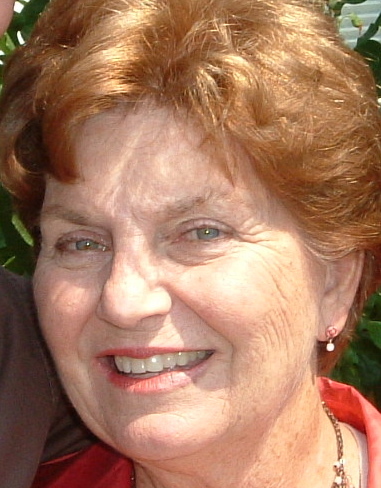
My mother was the first Jesuit Volunteer …
Modest beginning in the Last Frontier: Five women came to Alaska in 1956 as volunteer teachers. Fifty years later, their work here is seen as the beginning of an international Catholic service organization.
By Effie Caldarola
Anchor Writer
Marge Spils didn’t know she was making history when she headed north in 1956 to teach as a volunteer at Copper Valley School near Glennallen. The young Massachusetts college graduate — then Marge Mannix — just believed that it was another adventure, and for a good cause. She was joined by four other young women from Catholic colleges in Massachusetts, all of them persuaded by a warm-hearted Sister of St. Ann to come north to the missions. For the first couple of months, the women had to cross a stream to use an outhouse, and they learned how to plaster walls and glaze windows before the classrooms were ready for them to start their work of teaching. A friendly lodge owner let them take a weekly shower.
Fifty years later, that small group of women is heralded as the beginning of what was to become the Jesuit Volunteer Corps, now a national and international organization celebrating its 50th year.
The funny thing, Jesuit Father Tom Gallagher told the Anchor last week, is that even though the corps bears the name “Jesuit” now, a St. Ann Sister really came up with the whole idea. Sister George Edmond traveled to the East Coast to Catholic women’s schools who had lay apostolate programs, Father Gallagher explained. With slide shows and lectures, she recruited young women for Copper Valley, a boarding school serving mostly Native students that was operated jointly by the Jesuits and St. Ann Sisters. The Jesuits, who brought young men from Jesuit universities to help out during the summers at the school, knew a good thing when they saw it, and by the 1960s, they too were inviting young college graduates to join the newly named “Jesuit Volunteer Corps.”
The JFK connection
Anniversaries are a good time to ask some questions. Was the Jesuit Volunteer Corps really the model for President John F. Kennedy’s Peace Corps, as rumor has it? And what exactly does it mean to be, as the corps’ informal motto promises, “ruined for life?”. Spils, now a member of Holy Family Cathedral in Anchorage, said President Kennedy definitely paid a visit to her alma mater, Regis College, and asked the sister who directed the lay apostolate program, ” ‘If people will do this for the church, do you think they’d do it for the country?’”. As for being “ruined for life,” ask a former volunteer about it and they’ll probably smile and proceed to tell you how the corps changed everything. Marti Pausback was part of Anchorage’s first Jesuit Volunteer Corps community in 1985. A Colorado State University graduate, Pausback grew up in Aspen — a place she describes, along with her parish, as “rich, happy and white.” The Jesuit Volunteer Corps showed her “things I wouldn’t have seen”. “It shaped how I feel about the church,” Pausback said, giving her a “new image of the church which included social justice” as well as inclusiveness — “a join-us-at-the-table kind of thing”. Cathy Miller of Anchorage, a teacher, St. Elizabeth Ann Seton parishioner and mother of five grown children, was a Jesuit Volunteer in St. Marys, Alaska, from 1971 to ’73. “It set my life going in a new direction,” said Miller, a native of San Francisco. “I thought it would be a good adventure, but I never thought I’d be so influenced to live a life of service”. Like many Jesuit volunteers, Miller found her life partner, Tom, in the corps.
The Millers emphasized social justice in their family, Cathy said; their daughter Colleen, 24, became a second-generation Jesuit Volunteer in Birmingham, Ala., last year. Another daughter served in the Peace Corps. Jesuit Volunteers continue to serve in Alaska.
Heather Coulehan spent 1992-93 as a Jesuit Volunteer in Anchorage at Abused Women’s Aid in Crisis (AWAIC) and later spent two years, 2002 and 2003, teaching with Jesuit Volunteer International in South Africa. She remembers longingly the liturgies in South Africa: Masses full of rhythm and movement. Even the gifts were “danced” to the altar, she said. Retreats were also an important part of her corps life, she said. Volunteers are provided with three or four spiritual retreats during their volunteer year.
Ruined
So what is this “ruined for life” business? It’s a value thing, Cathy Miller said. Most former volunteers she knows are not wealthy — they don’t value “success” in the classic American way.
Coulehan agrees that the corps produces a counter-cultural effect in people, a way of looking at materialism, spirituality and the vulnerable that’s different from the norm. “I think it’s all about connections,” she said. “Connecting with people and your community on a different level. You see connections on a spiritual basis.”
According to a recent survey conducted by Fairfield University, the corps is acknowledged by most volunteers to be a touchstone experience of their lives. The survey of 5,000 former volunteers found that 98 percent feel that volunteer activity is important to citizenship, versus 74 percent of other Americans. It also found that 96 percent to 98 percent of former Jesuit volunteers donate to charity, regardless of income, and donate 25 percent more money than the average American household. The survey also found that of the four core values of the corps — spirituality, community, simple living and social justice — all remained important to the majority of respondents, with 86 percent saying social justice was important or very important in their current lives.
James Noonan, 24, is a Jesuit Volunteer this year at Covenant House in Anchorage. He graduated from a Jesuit school, Boston College, where he said he learned about “putting social justice talk into action” through a program called “Four Boston” — four hours of community service a week plus one hour of group reflection.
He joined the Jesuit Volunteer Corps hoping “to root myself” in the Ignatian concept of “contemplation in action,” and he hopes to carry that value on to a career in medicine (St. Ignatius of Loyola was the founder of the Jesuits). Pausback, who spent two years at McAuley Manor, a home for girls operated by Catholic Social Services, was a biology major in college. But she’s continued in the social service field — not unusual, according to the Fairfield University survey, which found 18 percent of former Jesuit volunteers work in the nonprofit sector, versus 7.4 percent of the general population. According to Jeanne Haster, executive director of Jesuit Volunteer Corps: Northwest, about 350 Jesuit Volunteers serve nationally each year, with about 40 international placements.
More than 85 volunteers will serve in the Northwest region next year, a larger number than the previous year but considerably lower than earlier years. The growing debt burden on college graduates is a factor, said Haster. Also, she said, in a sense the corps has been a victim of its own success. Volunteer organizations, both secular and religious, have mushroomed in the 50 years since five women made history at an isolated boarding school in Alaska.






 Daniel Spils